
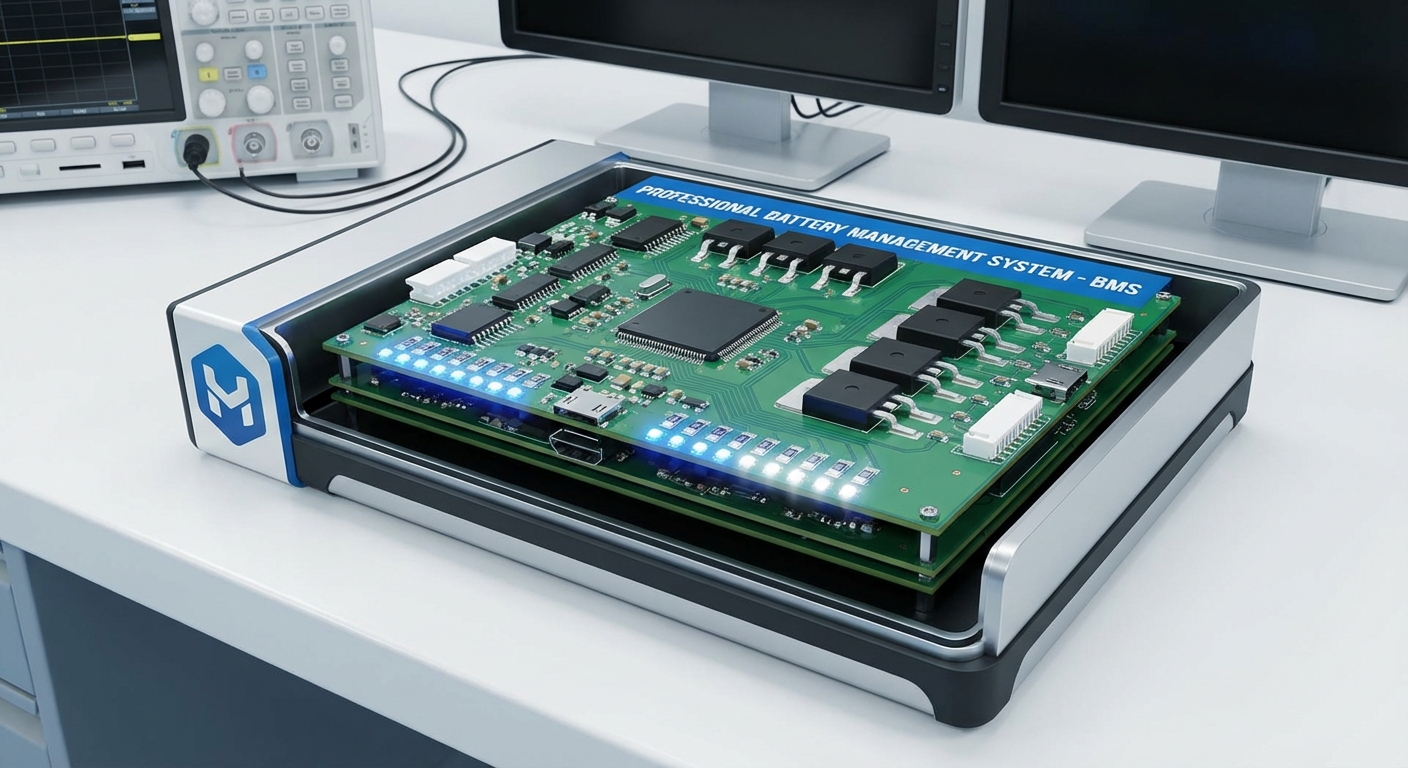
Battery balancing technology is one of the core functions of a BMS and directly impacts the performance and lifespan of a battery pack. This article will provide an in-depth analysis of the advantages and disadvantages of active and passive balancing technologies.
Passive Balancing Technology
Passive balancing uses resistors to dissipate excess energy from high-capacity batteries, thereby ensuring consistency among the batteries. Its advantages are:
- The circuit is simple and low-cost
- Technologically mature and highly reliable
- Suitable for small-capacity battery packs
Active Balancing Technology
Active balancing transfers energy from batteries with high charge levels to those with low charge levels through energy conversion. Its advantages include:
- High energy efficiency, no energy loss
- High balanced current, high efficiency
- Suitable for high-capacity battery packs
Our Innovative Solutions
Yingyue Electronics has developed hybrid balancing technology that combines the advantages of active and passive balancing, automatically switching between the two under different operating conditions to achieve optimal balancing results.