
High-Voltage Battery Pack Simulation
Supports simulation of total voltages up to 1,500 V, covering R&D and validation scenarios for energy storage battery clusters and power battery packs.
We provide an integrated testing platform for high-voltage battery applications—including energy storage systems, photovoltaic storage, and backup power supplies—covering everything from battery simulation and fault injection to automated integration testing and report generation.
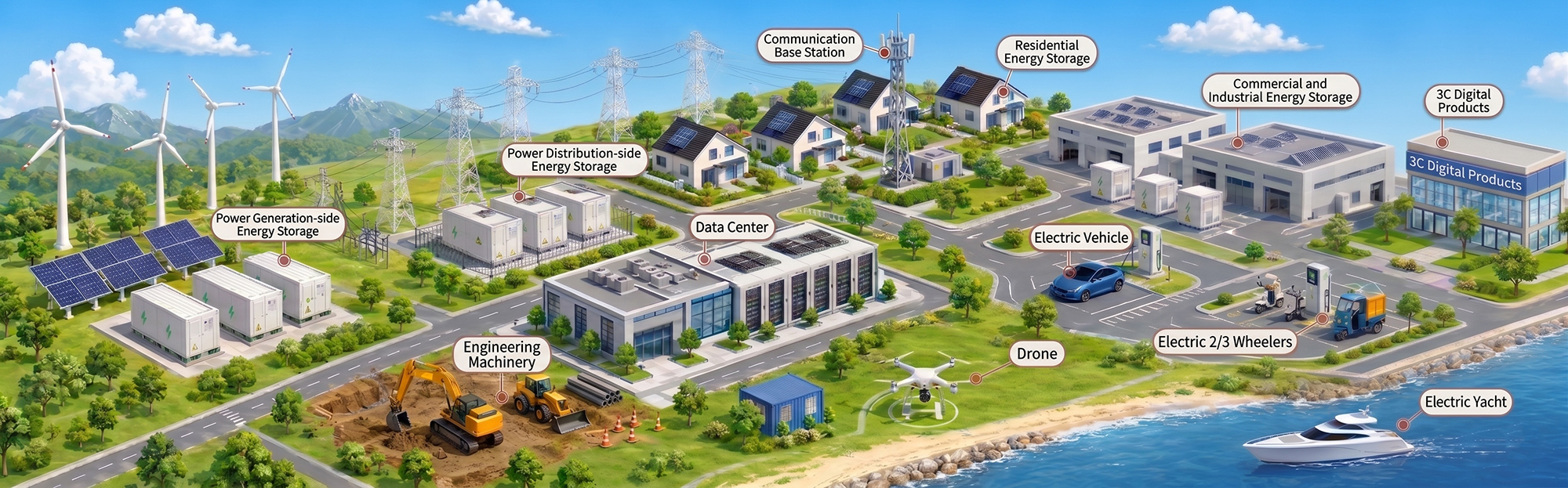
The BMS is responsible for monitoring battery status, ensuring battery safety, and coordinating charging and discharging strategies. Whether for energy storage plants, electric vehicles, or backup power systems, sampling accuracy, protection logic, balancing strategies, fault recovery, and communication integration must all be verified prior to deployment.
Yingyue Electronics' BMS testing platform enables R&D, testing, and production teams to replicate critical operating conditions without relying on actual battery packs through battery simulation, temperature and insulation simulation, fault injection, and automated software workflows, thereby reducing validation risks and the costs associated with repetitive testing.
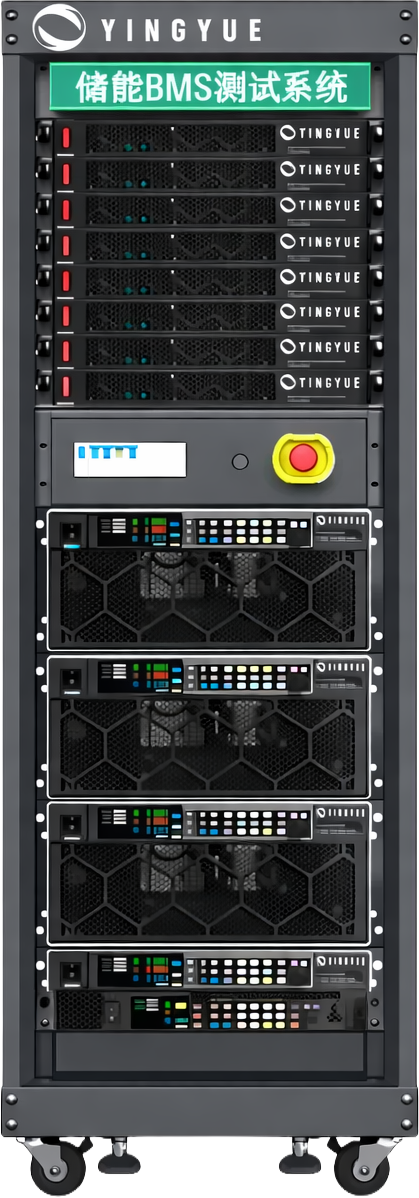
Supports simulation of total voltages up to 1,500 V, covering R&D and validation scenarios for energy storage battery clusters and power battery packs.
Supports validation of active and passive balancing scenarios, helping R&D teams identify balancing strategies and detect anomalies.
Tests can be performed on modules such as BMUs and BCMUs to evaluate static power consumption, pre-charging, self-discharge, and wake-up processes.
Includes temperature channels, insulation resistance simulation, and fault injection, covering the verification of protection algorithms and diagnostic functions.
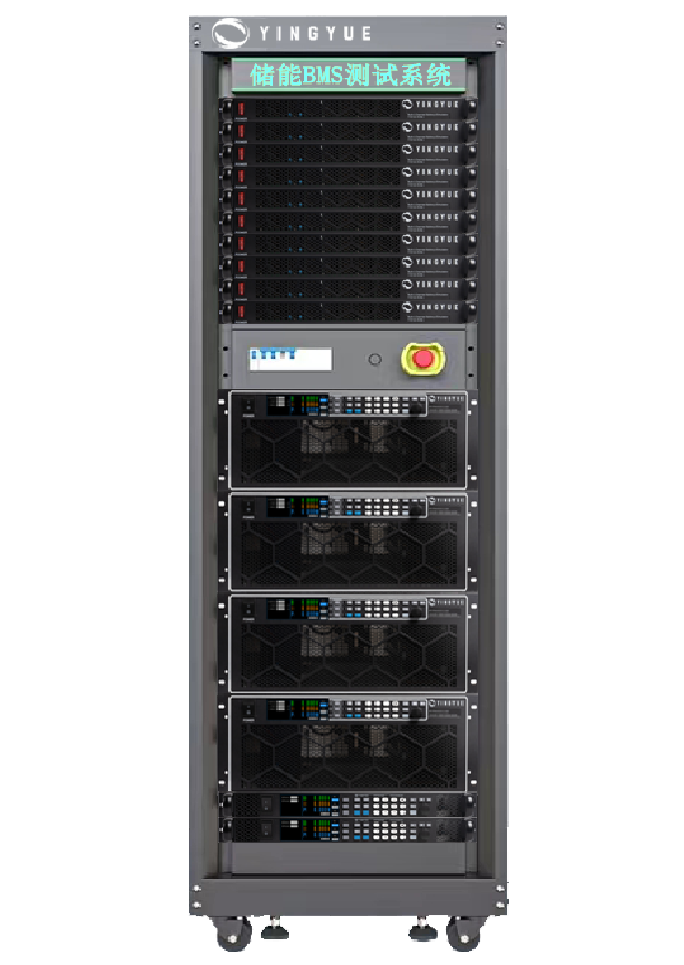
A cabinet-style test platform designed for energy storage BMS applications, which can serve as the hardware foundation for a complete solution.
View DetailsCovers single-cell simulation, high-voltage battery pack simulation, and communication extensions, facilitating rapid implementation of solutions.
View DetailsCustomized to accommodate the test subjects, production line cycle times, and existing systems, this creates a testing platform tailored to the on-site environment.
View Details